What Is ObamaCare? 2013-2014: Overview Part 1 (Insurance Subsidies)

Posted by – March 10, 2013

An ObamaCare Overview 2013-2014: Part 1

Oh man, I am so frustrated that people misunderstand ObamaCare—the Affordable Care Act (ACA)—and continually frame it as something it’s not. They frame it as some sort of universal health care coverage, or as some vague new program that replaces Medicare and Medicaid, or at least fixes their most egregious problems (Medicaid’s age 21 cut-off, for example). None of the above are true. I’m writing a book, a memoir of my fight against Alabama Medicaid’s age 21 cut off and a book-length exploration of the plight of young vent-dependent people in general, and if you’re wondering how ObamaCare changes things vis a vis Medicaid, it doesn’t. The Affordable Care Act expands Medicaid eligibility, but doesn’t change the underlying rules and regulations, or fill its most egregious gaps. So there’s very little about ObamaCare in my book; it just isn’t all that relevant for those of us with severe disabilities who have to rely on Medicaid and Medicare.

What is ObamaCare?

The public needs to ask this over and over again, until the wrong assumptions dissipate. Congress never debated universal health care coverage. When Congress debated the Affordable Care Act, they were debating a proposal nearly identical to a bill titled the “Health Equity and Access Reform Today Act” (HEART Act) which was introduced by Senate Republicans in 1993 as the conservative alternative to Bill Clinton’s health care legislation (which focused on an employer mandate to provide health insurance). The crux of the conservative proposal was essentially, “we want universal health care too, but through private insurance, and we’ll do that through an individual mandate; every American will have health insurance coverage.” The individual mandate means that the government requires individual citizens to have insurance.

The mandate made its political début in a 1989 Heritage Foundation brief titled “Assuring Affordable Health Care for All Americans,” as a counterpoint to the single-payer system and the employer mandate, which were favored in Democratic circles. In the brief, Stuart Butler, the foundation’s health-care expert, argued, “Many states now require passengers in automobiles to wear seat-belts for their own protection. Many others require anybody driving a car to have liability insurance. But neither the federal government nor any state requires all households to protect themselves from the potentially catastrophic costs of a serious accident or illness. Under the Heritage plan, there would be such a requirement.” The mandate made its first legislative appearance in 1993, in the Health Equity and Access Reform Today Act—the Republicans’ alternative to President Clinton’s health-reform bill—which was sponsored by John Chafee, of Rhode Island, and co-sponsored by eighteen Republicans, including Bob Dole, who was then the Senate Minority Leader.

Source: Why Republicans Oppose the Individual Health-Care Mandate : The New Yorker

By 2009, the debate had turned upside down, with Democrats supporting the Heritage Foundation‘s individual mandate as the core of the proposed Affordable Care Act, and the Republicans unanimously against the individual mandate. Inexplicably, Democrats have moved to the right and embraced the rightist policies of the past—Barack Obama has positioned himself as a George H. W. Bush-type of moderate conservative president, a dramatic break from prior black presidential candidates like Shirley Chisholm and Jesse Jackson—and Republicans have turned against their own policies after supporting them for two decades. It’s bizarro world!

The costs of the Affordable Care Act. almost all of the costs, come from the individual mandate and the associated subsidies. The core of ObamaCare, the nut meat, is the system of subsidized health insurance exchanges. The main idea is that “health insurance is unaffordable and we’ll fix that by adding subsidies that make insurance affordable, and for the poor we will expand Medicaid eligibility, then most everyone will have coverage.” Affordable Care Act proponents called this “achieving universality” by tweaking multiple pieces of the system, like a piecemeal universal health care. This rang hollow even then; it didn’t even sound like the proponents believed their own rhetoric. I didn’t buy the claims that we’d “get to universality” any more than the incredible claims about health care providers voluntarily holding down prices as part of the ObamaCare grand bargain.

The debate in Congress over the Affordable Care Act primarily revolved around the individual mandate, the potential costs and red tape nightmares involved, and, inexplicably, abortion. Though the ACA includes a firewall between its subsidies and abortion, there aren’t any abortion-funding provisions in the bill, and the legislation is not intended to address abortion at all, still, the debate centered on abortion to an unexpected degree, in the House of Representatives especially. President Obama signed Executive Order 13535 to reinforce the Hyde Amendment’s prohibitions on federal funding for abortion as related to the ACA.

During the 2008 Democratic primary, Hillary Clinton was for the individual mandate and Barack Obama was against it. I agreed with that version of Obama. The idea of requiring citizens to buy a defective product (health insurance scams) from select corporations is terrifying. The U.S. Supreme Court was asked to rule on the question of whether the federal government can require buying insurance and fine citizens for not acting, for non-activity. The court gave the individual mandate a thumbs up, as long as the fine is implemented as a tax. I think that this sets a horrible precedent in terms of the fusion of corporation and state. The Obama Administration, and future administrations, will decide which health insurance plans meet Affordable Care Act standards and are allowed into the insurance exchanges, and as we already have seen, for example with ACA requirements being waived for the most powerful companies, how corrupt that process can be.

In 2013-2014 the main provisions of ObamaCare, the subsidized health insurance exchanges—some, like New York’s, will be state-run, but where governors have refused to set up exchanges, for example Alabama, there will be federal-run exchanges—will go into effect, along with the individual mandate. Right now, only two percent of health insurance plans meet the minimum coverage requirements to be sold on the exchanges. We’ll see how things change as the requirements kick in and the exchanges come online (literally, the exchanges will be online marketplaces). Expect to see more than a few kerfuffles over the individual mandate penalty fines, plus some serious sticker shock—the cheapest type of plan under the ACA is a “bronze plan,” and according to an IRS estimate, bronze family plans for 4 and 5 person families are assumed to cost $20,000 a year in 2016—though it seems the exchanges’ subsidies may pay for the bulk of the exorbitant costs. I don’t know that pouring subsidies in won’t just incentivize insurers to keep raising prices. Removing the downward pressure on prices consumers exert when they can’t afford premium hikes, the feds saying “no matter how bad you gouge, we’ll pay it” seems INSANE to me, like something that would only make sense to an industry lobbyist.

Political cartoon by Nick, "Obama's Faustian Bargain"

Political cartoon by Nick, “Obama’s Faustian Bargain”

Massive subsidies that only increase are not a positive, in my view. Neither are subsidies to the health insurance companies amid an abusive dynamic “please stop killing children with preexisting conditions! Here, take $500 billion, just stop hurting us!” a positive; they’re actually the worst possible approach to this problem. And anyone who thinks abusive practices like the cruelty against those of us with preexisting conditions will end, you’re naive; new abuses and new loopholes to get old abuses through will appear on day 1. Awful unintended consequences are already arriving. The entire model desperately needs replacement.

Too often, health insurance is a scam. You pay in enormous sums each month just so the insurance company can deny you care in your hour of need. It’s essentially a very sophisticated, legal way to mug you each month. And when you subsidize something, you get more of it…

What is ObamaCare? it’s predominately a requirement to buy health insurance from select corporations with fines for disobedience, plus enormous subsidies for those selected corporations.

Next, in Part 2: the Supreme Court ruled that the “Medicaid expansion” provisions of the ACA must be voluntary for states. This has meant decision time for all 50 state governors across the country, but opting-in to the Medicaid expansion ISN’T “accepting ObamaCare.”

Chris Week: Ninth Anniversary—RIP Chris

Posted by – March 7, 2013

I’ve been thinking about my friend Chris a lot this week, especially in the days preceding and following March 4th, when the tragedy that took him happened.

When I was little, Chris was the bigger kid, both in age (four years older) and heft (kids with Duchenne Muscular Dystrophy—DMD, which I don’t have—tend to be heavy, seeming to keep their baby fat, plus, until the preteen years). He was the poster child for the Mobile MDA (Muscular Dystrophy Association). I’ve gone in-depth on this blog about what it was like being in the Mobile MDA in the 1980s before. There was really a sense that “I want to be involved in the MDA, I want my kids to be involved, and raise money for the MDA, so then when my child is older and in full decline and we need all the help we can get, the resources will be there.” Parent involvement in the MDA really was seen as an investment in your children’s future, so the feeling of betrayal was intense when the MDA of Mobile (transformed and unrecognizable as the community-engaged organization it was in 1980s) didn’t help Chris in his fight for survival or even note his death.

Chris and I really became friends as young adults, when he would hang out in my chat room (Disabled Teens Support Group) that I had set up as a safe space for people like us to share the unique challenges facing young people with disabilities. I ran the group on the Delphi Forums site, which was a very, very Web 1.0 platform that you could run chat rooms and message boards on. It was a clunky, antiquated tool, even at the time, and perhaps some of the language (“Disabled Teens”) was antiquated too, but we got a lot out of it. Chris and I shared a deep context of what it means to be a young, vent-dependent man in South Alabama, the very real challenges, threats, and pain involved, and a lot of those basics could go unsaid; that, in-and-of-itself, was very freeing. He was also the only other vent-dependent friend I had outside the home that was close enough (South Mobile) to see in person. I was at one of his birthday parties; an old guy in the neighborhood called the police about the loud rock music.

Chris had a mohawk, so dark red it was almost black. He loved metal. Especially metal performed by scantily-clad women. For him, you’re either 100% extreme, balls out, hardcore, or you’re wimpy (though he used much harsher terms than wimpy). So, he tended to see me as soft and decidedly un-metal, though he developed a deep respect for my work overturning Alabama Medicaid’s age 21 cut-off, or as he put it, “kicking ass.”

Chris, with his mohawk and gaunt, angular appearance, looked metal; he’d have been perfect for the glossy cover of a metal album. And it all fit. It fit as one of the only reasonable reactions to the unreasonable policy realities in the Deep South that yank all support and shove people with disabilities and their families to tiptoe a high-wire without a safety net. And it definitely fit his hardcore words, hardcore music, hardcore aesthetic. What’s more hardcore than life on a ventilator? What’s more extreme, more on the razor’s edge, than being in your face, rocking all over Mobile County, despite being on life support? And what’s more American than saying “f**k nature, the hell with the odds, I’m here, I’m on a vent, and I won’t give up.” To me and his friends, Chris was this amazing, punk rock “only in America” kind of figure. His death was a horrible loss.

Chris was also an incredible writer; I’ve never known anyone as good as him when it comes to short fiction. He once shared one of his short stories with me, about a Viking “berzerker” warrior. His chatting with my group on the Delphi Forums, led to him participating in other Delphi communities, RPG groups, where what he was really doing was writing a novel with others. Brilliant writing!! I wish it could’ve been properly compiled and published at that time.
Though this writing on Delphi, he met a young woman in Northern Alabama who he grew to love. Chris never let anyone neuter or infantilize him for a second; his passion for women was as hardcore as everything else about him. It’s awful that he never met this girl he loved and that overall, he never could get in-person reciprocal feeling from Alabama’s female half. Like me, he ultimately got the cold shoulder from every girl he met in Alabama.
In an email about sharing his feelings with the aforementioned girl, he wrote: “If you have a dream, or something you need to say, or to let out, don’t hesitate, don’t let go of that opportunity, it may never come again.”

The only extant piece on the web about Chris’ death is this, from Inclusion Daily News: Alabama Medicaid Policy Blamed For Friend’s Death (thank you Dave Reynolds for keeping this article available nine years in; I will keep it accessible from the front page sidebar of this blog in perpetuity.) Chris’ goals in life were like anyone’s, to survive, find his niche, and thrive. His parents did everything humanly possible to help him keep going, in sports terms, “they left it all on the field.” But they were put in an impossible situation by Alabama Medicaid’s policies, which ended most in-home care for recipients at age 21, knocking them down to about 12 hours of nursing care per week, apparently with the idea that the family could provide coverage without sleep for the rest of the week 24 hours a day. No human being can do that forever, though Chris’ family and friends tried, and kept it going for five years without Chris even being hospitalized. But it’s one of those probability things, Medicaid put them in a situation without care, where it is likely that eventually, a ventilator tube disconnection event would coincide with a time his mom went to the store and only one parent was present, and too asleep to respond given the exhaustion of the care every day. That tube disconnection meant… suffocating until brain dead. His parents shouldn’t blame themselves for the impossible situation Alabama Medicaid put them in. They never should’ve been thrust into that situation; if he weren’t in Alabama, it’s likely he would’ve received some care hours each day that would have enabled his mom to leave the home for supplies with peace of mind.

There’s a lot of blame to go around, but I think Alabama Medicaid should get the brunt of it for “just following orders,” mailing out termination notices with one line, “PDN (private duty nursing) to terminate after [xx.xx.xxxx]” (the person’s 21st birthday) and phoning nursing agencies to ensure they know no hours can be billed after that date, without ever ruminating on the barbarism of their actions or considering solutions. Part of the blame goes to the several Alabama politicians who ignored numerous pleas for help from Chris and his family. And, of course, the MDA ignored their cries for help when they could’ve helped Chris’ parents organize daily volunteers, or assisted somehow, large or small.
And I feel like part of the blame goes to me. Chris died after my “victory” over the 21 cut-off in February 2003, which set up a new program for vent-dependent, or in their terms, “technology assisted,” Alabamians who are “aging out” at 21. This program made the 21 cut-off, at least where ventboys are concerned, a thing of the past in Alabama, making my home state an island of relative sanity in a sea of Deep South states (including Florida) that continue to essentially shove their most vulnerable off a cliff just for turning 21, even now in 2013. But the “technology assisted” waiver I got started had no provision for grandfathering in people like Chris, cut off five years prior to the advent of the TA waiver. I never felt less victorious than the day Chris reacted to the fact that my “victory” meant no change for him. I made sure local news channel 15 knew about Chris’ situation; they did a significant feature on him about six months before his death. But I feel guilt that I didn’t launch a national effort for awareness and I didn’t push harder to involve lawyers. I also don’t understand the premise that I survive and he doesn’t.

I need to get back in the fight. Unless I’m actively fighting so similar tragedies don’t happen again, I don’t feel like I’ve found my niche. For 2013, this book I’m writing, this memoir/exposé, is like the “tip of the spear” of my new campaign on Medicaid 21-cut-off, with the focus on vent users. The vent-dependent population can’t afford to be invisible anymore.

Nick

Bribeocracy Update: the Quid Pro Quo status quo—Revolving Door

Posted by – March 3, 2013

Bribeocracy Update Winter/Q1 2013

I want this blog to be a useful source of information you’ll not get from TV or other web sites. You certainly don’t hear about Medicaid issues like “aging out” of most in-home support at age 21, and how it impacts the ventilator-dependent population, on other blogs. You won’t get in-depth coverage of Medicaid, how Medicaid is changing in the age of ObamaCare (eligibility is broadening under the “Medicaid expansion” without addressing anything else) and the policies that must change, on many other sites. But I also feel a responsibility to spotlight the disease, not just the symptoms, strike at the root causes, cover the corruption that prevents our government from listening to us, filling the gaps in our social safety net, improving services. The corrupto-sclerosis clogging the gears of the federal machine has not been this obvious, awful, and destructive to the people, in my lifetime. Corruption has made Congress and the executive branch so dysfunctional that we’re seeing symptoms of unprecedented severity, like the oddly-named “sequestration.”

Good government has disintegrated in the acid of dysfunctional, corrupt Washington. It’s gotten SO BAD that “the sequester” is taking effect, meaning we can’t even agree that laying off a generation of NIH scientists and breaking the back of American medical research is bad, that gutting Head Start and K-12 funding is bad, that yanking housing vouchers out from under 125,000 Americans, many of them people with disabilities, is bad. Americans with disabilities will need homeless shelters—oh wait, they’re gutting funding for emergency shelters too, dumping an estimated 100,000 homeless people, who will end up on the sidewalks or end up suffering a traumatic displacement to other shelters, or more likely, emergency rooms (the standard dumping ground for populations our society hates and doesn’t want to face or deal with). This will hit New York City at the worst possible moment; in January 2013, more than 50,000 people, on average, slept in our city’s homeless shelters each night, a new record, easily surpassing past NYC averages, even those during the notorious The Warriors-looking NYC of the ’70s and ’80s. It’s likely that, by putting vulnerable populations out onto the streets en masse, we’ll create 21st century horror stories I can’t even imagine right now. All this brought to you by “the sequester.”

“Sequestration,” again, is just a symptom. The root cause is the culture of corruption and dysfunction in Washington that runs deeper, and is more corrosive and paralyzing now, than it has been during any other era in my lifetime. I believe that we have to attack corruption, and, recognizing that Team Donkey and Team Elephant swim in the same corrupt pond, mercilessly expose bribery and the quid pro quo status quo to the sunlight wherever it lives. Under the tag Bribeocracy, I’ve been trying to shed light on corruption on this blog for years. Last month, I talked about the quid pro quo status quo within the executive branch, which I hope ya’ll will understand is not okay; even if you give President Obama a pass for giving ambassador posts to top campaign contributors, I hope you won’t let him off the hook for giving out cabinet positions in the same manner, to CEOs who were top donors.

Today, I’ll talk about the “revolving door,” the phenomenon of creatures of Washington rotating in and out of lobbying and powerful positions in the White House, executive branch agencies, Congress, and Congressional staffs. These are the Senators, Congressmen, and key staffers who purport to work for the public good, then exit public service but stay on Capitol Hill to cash in on the work they did under oath to serve their district. They use their contacts and knowledge to advantage monied interests.

Some high profile examples: Rep. Billy Tauzin of Louisiana’s 3rd Congressional district, chair of the House committee that oversees prescription drugs during GWB’s first term as president, negotiated the 2003 Medicare Prescription Drug Bill—soon after known as Medicare Part D—on crazy-skewed terms in favor of the pharmaceutical conglomerates (not only were private pharmacies and citizens banned from importing affordable drugs from Canada, ever, Medicare is banned from negotiating bulk prices or paying anything below full sticker price for prescription drugs) and then turned around hardly two months later and quit Congress in order to take the helm at the Pharmaceutical Research and Manufacturers of America (PhRMA), the giant trade association he had essentially let craft Medicare Part D while chairman. It’s one of the most brazen revolving door kickbacks the media has ever ignored. In Tauzin, Louisiana lost its most powerful voice in the House—seniority means how much clout and bargaining power your state and district has in the House—and the loss of voice, and betrayal, must’ve deeply stung his constituents; they might have felt like some unstoppable vixen took their man.

In my post Living in Zomerica, I mentioned that the so-called “Fiscal Cliff Bill,” passed two hours into falling off the cliff (2 a.m. EST on New Year’s Day, January 1, 2013) had egregious corporate welfare in it. Man, that thing was stuffed like a piñata with goodies for corporate campaign contributors. But beyond the eight industries receiving subsidies that I mentioned in my prior post, reports soon surfaced of a lucrative loophole for pharmaceutical company Amgen in the Fiscal Cliff Bill. The New York Times uncovered a sordid, almost unbelievably bizarre “revolving door” story that led to the kickback for Amgen. The loophole for Amgen was negotiated by a top aide for Sen. Orrin Hatch who previously worked as a health policy analyst for Amgen. The former chiefs of staff for both Sen. Max Baucus (D – Corrupt) and Sen. Mitch McConnell (R – Corrupt) came back to Capitol Hill as Amgen lobbyists and lobbied their recent ex-bosses; it’s thought that notoriously bribable Senator Max Baucus slid the Amgen provision into the Fiscal Cliff Bill in the dark of night at the eleventh-hour, but it’s clear that there’s no daylight between Republicans and Democrats on this revolving door problem. They’re both up to their elbows equally in this cesspool of corruption.
In this Bill Moyers interview, tiny Vermont’s only representative in the House, Peter Welch, explains why he’s fighting to get Amgen’s “sweetheart deal” repealed.

A case like Rep. Tauzin’s emerged recently. Rep. Jo Ann Emerson, about two weeks after being sworn in to the 113th Congress for her tenth term, announced her resignation January 22, 2013 and took a job as CEO of the National Rural Electric Cooperative Association.National Rural Electric Cooperative Association NRECA, where the last CEO was paid around $1.7 Million for a year, one of Washington’s largest and most influential trade associations. Now, the 8th district in Missouri’s “bootheel”—the poorest in Missouri, and one of the 10 poorest in the nation—has to foot the bill for a reported $1 million election on June 4th.

The National Rural Electric Cooperative Association was the biggest single campaign contributor to both Jo Ann over the years, and to her husband Rep. Bill Emerson, who she inherited the Congressional seat from upon his death in 1996. Both Mr. and Mrs. Emerson were lobbyists in Washington prior to serving in the House of Representatives, and seem to be entirely creatures of Washington; neither were born in or near the impoverished rural district they swore to represent. Her ties to the district are much more tenuous than her husband’s were—at least he was a Missourian—she’s from Maryland, born and raised. So even though Jo Ann Emerson was Missouri’s most senior member of Congress, so Missouri loses a lot of clout in the House upon her departure, but it’s not the same as losing a Billy Tauzin, who’s deeply connected to his district. I think that understanding a district is essential to representing it. When I met with my Rep. in Mobile, Jo Bonner (Alabama’s 1st Congressional district, covering the entirety of Alabama’s Coastal counties, that is to say, Mobile and environs) even though we’re on the opposite sides of plenty of issues, since he comes from Mobile, we immediately have a shared culture, references, points of context, that make it easy for us to work together. Having that local connection is so very important!

The founding generation (the framers of the Constitution, founding fathers and mothers, and others of the spirit of ’76) intended the House of Representatives to be a constantly improving and updating body of the most knowledgable and wise representatives of the districts, to assess the realities on the ground, the results of the American experiment, and respond when adjustments are necessary. I know that because of bribeocracy supplanting democracy, we can’t expect good government to return in 2013, but definitely we can do better than the blatant abuse of people like Tauzin and Emerson using, then losing Congressional districts, cashing in on seniority.

Details of the sordid, weird, revolving Emerson in this CNN investigative report:

Worst revelations from the report:

    Unintended consequences? Laws prohibiting members of Congress from becoming registered lobbyists for two years after leaving office have backfired, making people like Emerson even more valued hires; they can bribe and influence on Capitol Hill for two whole years without any of the regulations or limitations registered lobbyists are subject to under current law. Monied interests are gaining from the two year waiting period purportedly designed to shut the revolting door.
    Jo Ann Emerson isn’t alone in leaving the House as the 113th Congress begins, she is one of five outgoing members—four Republicans and one Democrat—to abandon their constituents in favor of “influence industry” jobs.

Never stop exposing corruption.

Nick

Easter egg: mousing over a few links reveals hidden lulz in some of the tags

Wow!! Obama appointments sold to highest bidder

Posted by – February 10, 2013

Dear reader:

We’re facing really horrible corruption in our government; it’s getting so bad, we’re nearing like end-stage Byzantine Empire type corruption, with the rot of corruption undermining every government bureaucracy, every political appointment, and the decay reinforced by a corrupt people and the government feeding it back to people in this demonic loop.

This is how bad it’s gotten: it’s become so common for presidents to reward their biggest presidential campaign “donors” with cushy ambassadorships abroad, a study, “What Price the Court of St. James’s? Political Influences on Ambassadorial Postings of the United States of America,” published by two researchers (J.W. Fedderke and D. Jett) out of Penn State’s International Relations Dept. in partnership with Economic Research South Africa (ERSA) have now pinpointed the approximate price tags attached to ambassador appointments in the current system (quid pro quo is only illegal bribery if outside the campaign contribution system, kids!)

Fedderke and Jett discovered that big donors who directly contributed $550,000, or bundled contributions of $750,000, had a 90 percent chance of being posted to a country in Western Europe.

“What we can observe is data on contributions and postings,” Dr. Fedderke said in an interview. “And on the basis of that, we can infer an implicit valuation on postings in monetary terms — even if they haven’t contributed that much.”

When isolating a country’s wealth over other factors, Luxembourg came in at the top of the chart, with a posting there valued at $3.1 million in direct contributions, while an appointment to Portugal was predicted to have a value of $602,686 in personal contributions. The model suggests that bundlers can get the same posts for less: Portugal was valued at about $341,160 in bundled contributions, Luxembourg at $1.8 million.

When factoring in a country’s tourist trade, however, France and Monaco top the list, with the level of personal contributions at $6.2 million and bundled contributions at $4.4 million.

The prices, authors note, vary considerably depending on which factors to emphasize. And in some cases, the actual nominees appeared to “overpay” for their positions — raising or giving more than the model would suggest was necessary — and in some cases “underpay.” That is because some donors bargain poorly for their positions, the authors suggest, while others may possess attributes (business experience, a personal connection to the president) that aid their case. But regardless of the model, Dr. Fedderke and Dr. Jett found, political ambassadors are more likely to be appointed to those countries that are wealthy, popular tourist destinations and safe.

Source: Study Puts ‘Cost’ to Landing Diplomatic Posts – NYTimes.com

This year, the race to press the president for purchased ambassadorships is more intense than ever, due to the unprecedented flood of donations from billionaires to Obama and Obama’s “independent” (LOL LOL} Super PAC during the 2012 election cycle. Vogue editor Anna Wintour, one of Obama’s biggest bundlers, was pushing to be ambassador to Britain. But she was edged out by “someone who had done even more for Mr. Obama: Matthew Barzun, a genial former technology executive who spent 20 grueling months as finance chairman of the president’s national fund-raising operation.” “The president now has six years of relationships, not two years,” said Andy Spahn, a public relations and political consultant who, along with Jeffrey Katzenberg, the film producer, was Mr. Obama’s top Los Angeles fund-raiser. ‘So I expect that it will be a lot more competitive this time around.’” Source: Well-Trod Path – Political Donor to Ambassador – NYTimes.com
Of course, the salient point is missed, none of these people have diplomatic experience!! DUDE! What happens when delicate negotiations with Britain are needed? what if an EU Parliament meeting at the Espace Léopold in Brussels is bombed by terrorists? what if the French government falls amid nation-wide protests and general strikes? or if Spain is gripped by riots (again)? This isn’t your father’s Western Europe. A placid tourist destination can quickly turn into a global flashpoint of popular unrest and/or ground zero in the newest financial earthquake. Placing corporate donors in charge could be very self-destructive.

Now, it’s even worse. Obama has appointed the CEO of REI (Recreational Equipment Inc.) and top Democratic Party fundraiser Sally Jewell to head the Dept. of Interior, which stewards our national parks, national lands, the resources on national lands and runs the widely-despised Bureau of Indian Affairs. Media coverage of Jewell is (so far) lauding her appointment, the overwhelming majority showing positive quotes; of course, the literal merger of corporate CEO and federal agency isn’t questioned.

President Obama is now expected to nominate Penny Pritzker “Chicago hotel scion and businesswoman and Obama mega-bundler” for Secretary of Commerce. Pritzker “ranks #255 in 2012 on the Forbes 400 list of wealthiest Americans” and “was reportedly in the hunt for that job back in 2008″ but withdrew when predatory lending and toxic subprime mortgages perpetrated by the family zombie bank was exposed. That’s apparently A-okay for today’s cabinet! This is gross.
Source: Obama donor Pritzker for Commerce Secretary? – In the Loop – The Washington Post
The narrative I expect the media to spout is: “Gender equality WOO! Pritzker is the second female Commerce Secretary in U.S. history! Isn’t it great how wonderful the wonderful Obama Administration is, the greatest, most gender diverse administration evah!”
A cabinet of only uber rich people is not DIVERSE! it’s actually really awful, elitist, and undemocratic, and horrible!

It’s a very bad thing when your government won’t even consider candidates outside of the mega-wealthy 0.5% that bribe donate to campaigns.

Damn, dude! That’s corrupt.

Nick

Tom Wolfe Talks Memoir: “the worst form of fiction”

Posted by – February 10, 2013

I’m writing a memoir now, well, memoir/serious nonfiction/exposé, finally the Nick’s Crusade book, so I was interested in Tom Wolfe’s (brief) comments on Memoir. He quotes Orwell “memoir is the worst form of fiction” because you focus on the sensational, not the mundane and humiliating that makes up 75% of life (then he goes into one of his humiliations, which makes no sense to me, but whatevs).

Don’t worry dear reader, my book will be chock-full of fails and humiliations. I don’t leave out 3/4 of life; without the humiliation, it’s not very interesting.

Nick

Plug Uglies: top hat-toughs

Posted by – January 20, 2013

Here’s a fascinating topic you won’t find elsewhere: the Plug Uglies.

The Plug Uglies were a gang of nativist thugs that ran Baltimore for nearly seven years uninterrupted in the 1850s. The American Party sprung from the grassroots in reaction to the flood of immigration in the mid-1800s, which meant you had a substantial population of “native” English-speaking Protestant young men unemployed or barely employed because of stiff competition from low-wage immigrant laborers who had more grasp of Gaelic or German than English. Jacksonian Democrats ended up spawning Democratic Party machines—New York’s Tammany Hall led by Boss Tweed for example—on the ward and city levels that provided jobs and patronage to the successive waves of immigrants in exchange for votes, often leaving existing populations feeling unrepresented.  As large populations of young males felt economically and politically displaced, especially when the main alternative to the Democratic Party, the Whig Party, went the way of the dodo bird, they began to organize a new political movement to express their frustrations (a major political realignment).  And local gangs of angry young men formed to support their new party and confront existing parties’ power, with polls and punches.  The most vile anti-Catholic conspiracy theories imaginable spread like wildfire through these gangs, who came to believe that Irish Catholics and other “papists” were loyal to the Pope over the Republic.  “America for Americans” was their motto, and they figured only Protestants could be true, loyal citizens.  The American Party was also known as the Know Nothing Party—because of their vulnerable position as a fledgling third party and their penchant for murder and other crimes, they tended to only answer police inquiries with “I know nothing.”  Once in the Spring Hill College library I found note of Know Nothing violence: not long after the college’s 1848 switch to Jesuit administration, French Jesuits newly arrived to teach at Spring Hill were shot and killed; two priests cornered alone in the local wetlands killed by Know Nothings in as many years.

But develop the party did, growing up from the grassroots to become a major factor in politics, winning the mayor’s office in New Orleans, Chicago, San Francisco, New York City, Philadelphia, and Baltimore, among many others.  In 1854, Know-Nothing candidates even won control of the Massachusetts legislature.¹  The local grassroots backing for political parties in the mid-19th century has no equivalent today, especially when it comes to the American Party, which was a mass movement more organized than any grassroots thing today; Baltimore was divided into 20 wards, each with its own ward boss and political clubs (like the Plug Uglies, Rip Raps, Rough Skins, Regulators, Wampanoags, Calithumpians, Tigers, Butt Enders, Bloody Tubs, etc. supporting the Know Nothings, and also clubs for the opposing Democratic Party).  The clubs often started as offshoots of volunteer fire departments, though this was a joke; the “volunteer fire companies” created more fires than they extinguished. Maryland Know Nothings had councils at the ward, city and state levels to coordinate handing out patronage jobs, organize events and campaigns, and groom and endorse candidates.  36% of Baltimore government jobs during American Party control were distributed to Know Nothing gang members as patronage appointments, though 89% of the jobs given to such “rowdies” were low-wage working class jobs, especially as ward policeman and the like.²   When Know Nothing thugs won an especially gory street battle against “upper class” voting rights reformers in New Orleans, the telegraph conveyed the news to Know Nothing clubs up and down the U.S., and Plug Uglies in Baltimore set off fireworks in celebration of the “triumph.” Affiliated gangs from Cincinnati and Philadelphia visited Baltimore several times throughout the 1850s to clink mugs and celebrate election “wins” in the center of American Party power. This was the most organized mayhem and thuggery EVER!

In New York City, the leading nativist “club” (gang) were the Bowery Boys, aligned with William “Bill the Butcher” Poole.  He was depicted in the book Gangs of New York: An Informal History of the Underworld by Herbert Asbury—informal, indeed, it’s quite heavily fictionalized, with much of the material acquired from interviews with aging gang braggarts in prison and some of it pure urban legend—and Daniel Day Lewis famously immortalized Bill in the Scorsese epic Gangs of New York (so loosely based

Daniel Day Lewis as "Bill the Butcher"

Daniel Day Lewis immortalized "Bill the Butcher" on the silver screen

on Asbury’s book that it is set eight years after the real William Poole’s death, and unlike Casablanca or The Godfather which won Academy Awards for Best Screenplay Adapted from Another Work, Gangs was honored with a Best Original Screenplay Oscar).  In the movie, Bill ran a small but formidable criminal fiefdom in the Five Points neighborhood, using the stovepipe hat-wearing Bowery Boys as muscle. In real life, William Poole was a member of the Bowery Boys but not a kingpin or neighborhood boss. He was involved in the Bowery Boys’ volunteer fire dept. that did more sabotaging and disrespecting rival gangs’ fire engines than actual firefighting. Bill campaigned for nativist candidates and his butcher shop—his nickname was literal, he cut and distributed meats to people who wanted to buy meats—became Know Nothing HQ. Among his contemporaries, he was most known for being really amazing at 19th century-style fists-3ft-out bare-knuckle boxing. Bill the Butcher was one of NYC’s most colorful characters, no doubt, but while the Bowery Boys shared the same habits, stovepipe hats, anti-immigrant sentiments and methods, their influence never even neared that of the Plug Uglies.

The Plug Uglies grew and grew to be the most powerful and feared club of nativist thugs in history, the term “plug ugly” itself becoming genericized to mean any such stovepipe hat-wearing street tough.   While the Bowery Boys cornered the market on crime in one neighborhood, the Plug Uglies ran an entire city, sometimes even nearing power in all of Maryland. Controlling the streets and only allowing wards to vote for American Party (know nothing) candidates was their path to power. One way they steered elections was especially extraordinary: they would “coop” any vulnerable immigrants, homeless people and men weaker than them in basements or shacks, 40-90 men to a shack, then herd them to vote over and over again in different wards wearing different clothes.  Edgar Allan Poe was slipped a mickey and “cooped” by Plug Uglies right before his death, and was seen at different polling places in unfamiliar clothes. Poe experts still speculate about the poet’s death. For her part, Poe’s cousin’s daughter and important Poe scholar Elisabeth Ellicott Poe, placed blame squarely on the Plug Uglies’ shoulders, writing a piece marking the centennial of Edgar Allan Poe’s birth and recounting his history, that “On the night of October 4, 1849, Edgar Allan Poe arrived in Baltimore from Richmond. He was going North to be married, and was last seen to alight from the Richmond train in Baltimore and go into a near-by saloon. What happened after that, in brief, was this: His drink was drugged under

Joke image: Lyrics from Queen's "Bohemian Rhapsody" "I'm just a Poe boy, from a Poe family," juxtaposed with an image of Edgar Allan Poe

"I'm just a Poe boy, from a Poe family."

direction of a gang of plug-uglies and he was voted about the city next day in the elections as a repeater while still drugged. The plug-uglies were members of a secret political organization, and their lips were sealed. But a certain Passano of that society, in after years said that Edgar Poe was kept in his coop that night. After the plug-uglies had finished with the unfortunate man he was thrown carelessly into the street, left to die if he willed. …he never recovered sufficiently to give the details of his dreadful plight.”³

Back then, you brought your own ballot with you to the polls, and they were typically brightly colored and easily identified—the American Party’s ballot was emblazoned with red stripes—hardly secret balloting.  Plug Uglies would famously discourage any voter who showed up with a ballot in hand of another color, not the red-striped ballot, by shoving a shoemaker’s awl into them, sometimes kneeing unsuspecting victims with awls strapped to their knees, or throwing them out of the nearest window.  An allied nativist gang, the Blood Tubs, discouraged immigrants from voting by dunking them in tubs full of pig blood; seeing a guy or two returning to your neighborhood covered in gore really had a chilling effect. Controlling the voting was how Know Nothing gangs controlled city officials and thus Baltimore, lock, stock and barrel.

The shoemaker’s awl, a short (and easily-concealed) spike intended for poking holes in shoe-leather became the Plug Uglies’ symbol, both indicating their status as sons of the working class and for humorous effect.  Shortly before the presidential election in 1860, in one of their largest (and last) mass demonstrations, the Plug Uglies hired a blacksmith to pound out awls with his hammer and anvil in public, forging them en masse during the rally and handing them out to supporters.  They would march in massive torchlight processions

An awl

This is what a shoemaker's awl looks like

carrying awls and awl signs and banners, one hugely inscribed with the words “with this [picture of awl] we will do the work,” more often an enormous banner depicting an awl and nothing else.  They would shout “the Third Ward is Awl right!” and “come and vote, there’s room for AWL!” while marching to polling places.

A large part of what makes the Plug Uglies interesting is their uniquely American sense of humor, common-man camaraderie, and that hard-to-capture spirit of Loki, chief of tricksters, pranks, disobedience, mayhem, chaos and the like, in Norse mythology.

This was a gang without parallel. The Plug Uglies had their own city, their own judges (who sometimes heard cases while inebriated), their own American Party mayor (Mayor Swann) and governor (Thomas Holliday Hicks), and they even had their own club song.  At the height of their influence, the Plug Uglies even had a Know Nothing presidential candidate, ex-president Millard Fillmore, and managed to sway Maryland’s votes in his favor in the 1856 presidential election, making Maryland the only state in the union he won.

Poor Millard Fillmore was the unlucky 13th President of the United States, only becoming commander-in-chief by accident when newly-elected president Zachary Taylor died of dysentery-like symptoms. President Taylor became ill after seeking solace from the oppressive heat of Washington, DC following his first

"You Have Died of Dysentery."

As the famed death screen from the Apple II game Oregon Trail said, "You Have Died of Dysentery."

Fourth of July celebration as president (which included the groundbreaking ceremony for the Washington Monument) and downing cold milk and cherries to cool off. The milk was evidently even more disturbed by the heat than Taylor, as the new president quickly developed gastrointestinal distress. The not-so-knowledgeable doctors of the time sought to treat poor Taylor’s “bilious diarrhea” with calomel (mercury chloride, which causes mercury poisoning and vomiting) and ipecac, an emetic—vomit inducer—of such explosive power that under the auspices of modern medicine, it has been banned for many years. These lethal prescriptions, given in mega doses of 40 grains each, finished off President Taylor; that he endured as many days as he did can only be attributed to what a strong, big bear of a man he was.

So, Taylor’s vice president, the unremarkable upstate New York functionary Millard Fillmore, whose military feats’ greatest extent was leading a militia to defend Buffalo, NY from Mexican invasion during the same war Taylor won improbable victories at Palo Alto and Monterrey, became president, to general confusion, disbelief and shouts of “Millard what the who?” The entire cabinet resigned, and bad blood was high. Taylor, though a slave-owning Virginian himself, in fact the last slave holding president ever—and the last southern man elected president until LBJ, had always taken the Andrew Jackson position on Southern radicals, that secession was off the table, and anyone inciting rebellion would be hung without hesitation and he would gladly lead the Army into South Carolina himself. Taylor, “Old Rough and Ready,” the old Mexican War hero and tough, manly military man, was given the Whig Party‘s presidential nomination after much political wrangling and deal-making, then Whigs consolidated support behind the general during the campaign, with speeches on his behalf in every state and favor and trust growing up around Taylor. No such Whig consensus existed for Millard Fillmore, and that Taylor died—just as William Henry Harrison, the only other Whig president died, early in his term—meant the death knell for the Whig Party (more on the Whig Party in a future post). Fillmore was the last president aligned with the Whigs.

Unlike Taylor, Fillmore was an early “Doughface,” a northerner with southern-sympathies, called doughfaces for leaning toward beardless southern gentility amid bearded, northern manly men⁴ (more on politics and facial hair in a future post). Not only was Fillmore a doughface, southern-sympathizing before the term doughface was even popularized, he was a doughman; I’d unequivocally call him America’s doughiest-looking president. The Fillsmorey Doughboy. And he was quickly despised by all sides.

Millard Fillmore, 13th President of the United States

Official White House portrait of Millard Fillmore

I don’t quite understand why Fillmore is consistently ranked as one of history’s worst presidents by historians. Yeah he inherited a bunch of intractable problems, and he wasn’t as well-suited as Zachary Taylor to steer a ship of state on the brink of sinking due to sectional strife, but who was?? He supported the Compromise of 1850 and was instrumental in its passage, which few historians denounce as totally terrible. Fillmore was responsible for California (in its present configuration, not split) being admitted as a U.S. state and a free state, the Mormons getting a territory of their own, Utah Territory with Brigham Young appointed territorial governor, and he got the Texans—who were preparing for war—to calm down and give up their territorial claims on much of eastern New Mexico, though they got to keep El Paso. All these accomplishments in one compromise bill. The worst thing that can be said of the Compromise is it included the loathsome Fugitive Slave Act, which required the North to aid in the capture and return of escaped slaves. This riled up the North, and northern Whigs like Abraham Lincoln began to think of third party efforts. But the Compromise was nothing as inflammatory as the Kansas-Nebraska Act, which compelled settlers to flood into Kansas and out-vote and out-kill each other over the slavery question, and caused the Democratic Party to split, the last vestiges of the Whig Party to disintegrate, and a third party—the Republican Party, founded in 1854—to rise from its ashes with much the same platform, except a hard-line against slavery.

I also don’t understand what possessed Fillmore to run for president again on the Know Nothing ticket. Just the fact that he’s seeking a nonconsecutive second term as President (a really weird feat, accomplished only once in American politics, by Grover Cleveland) is baffling enough. That his running mate was Andrew Jackson‘s nephew Andrew Jackson Donelson is

Poster heralding the American Party presidential ticket

American Party 1856 presidential ticket, Fillmore/Donelson

even stranger. Andrew Jackson had nearly nothing in common with the Know Nothing movement; in fact, it was Jacksonian Democrats brawling in the streets against the Plug Uglies. I suppose Millard Fillmore became an American Party candidate out of opportunistic urges, and because so many Whigs—the ones that didn’t flock to the newly-mobilized Republican Party anyhow—were absorbed into the American Party. Know Nothings didn’t stump on the issue of slavery, maybe that was appealing to Fillmore, but they took a strong pro-Union position, disagreeing with radicals on both sides. This was especially true of Baltimore Know Nothings, who described themselves as “warm friends and advocates of the Union against the fire-eaters and free soilers.” Of course, many American Party men held to crazy conspiracy theories that secession was an evil plot by the Pope to destroy the U.S., so placing them on a political spectrum or finding their views in relation to other parties of the era might be too strenuous.⁵

This part of the Plug Ugly official club song shows their support for Fillmore:

We don’t like the Demmy’s, for Fillmore is our boast,
And here in old Maryland he is a perfect host,
Nor do we love the Argus, with all its boasted eyes,
For our motto is “ever on,” root hog or die,
For we are the native party…

But as we are all natives; and proudly we can brag,
As true sons of America, we’ll fight beneath its flag,
Nor from the field of honor, never will we fly,
But as good Plug Uglies we’ll root hog or die.
For we are the native party…⁶

Go to the link in the 6 footnote for a much more complete rendering of the lyrics.

By “Demmy’s” it’s clear they mean the Democrats. “Nor do we love the Argus” took some research; the Argus is a giant with a hundred eyes in Greek mythology, and newspapers tended to take its name as a symbol of the reporter (some still bear the name). Apparently, the Daily Argus was a leading Democratic-leaning newspaper in Baltimore that the Plug Uglies disdained. “Root hog, or die” is an American idiom expressing self-reliance and hard-scrabble reality; root out your own living because no one’s going to do it for you. The idiom found its way into numerous 19th century and early 20th century songs.

Even after the 1856 election, shouts of “Go Fillmore!” were common among Plug Uglies. Typically, polite society doughy types like Fillmore were horrified at the “rowdyism” of the Plug Uglies and affiliated gangs. The public drunkenness and open carrying of revolvers (usually combined) put off more respectable Know Nothings. One Harry Shriver, in the mercantile business in Baltimore, left the American Party, denouncing its “informal rascality.” “I want to be an American, but not a friend of rowdyism.” To such polite society types, the Plug Uglies would say, “come on up, there’s room for AWL! Heh Heh!”

But the Plug Uglies had serious blood on their hands; gore and death isn’t so funny.  When the Plug Uglies launched a major riot in Washington, DC in 1857, the Rip Raps, and Shifflers from Philadelphia in tow, there was panic in the White House. President James Buchanan called in the U.S. Marine Corps, who didn’t play around; they shot to kill the attackers. Unfortunately, more Washingtonians trying to vote were killed than the nativist thugs bringing mayhem across state lines. See Know Nothing Riot, Washington, DC

Their most violent battles were what the Plug Uglies called “battle royals” against Democratic party groups; some election day brawls left both sides with a half-dozen of their brothers earless, limbless or deceased.  The worst of the battle royals accompanied the 1856 municipal elections. Rioting spread city-wide, with simultaneous brawls in multiple wards. One climatic ward battle was of such a grand scale that it included old artillery piece sending cannonballs into enemy lines.  The stovepipe hats the gangsters wore were part of the battle gear, not formal wear used to accessorize on the way to the ball, kiddos! They stuffed their top hats with leather and wool scraps to cushion the skull against blows, and pulled down the hats over their ears in hopes of keeping both ears.

Photography not being widespread in the 1850s, nor typically pointed at street toughs, I wasn’t able to find a picture of one. Thus, I’ve taken up the task of cartooning a member of the Plug Uglies based on contemporary descriptions, complete with awl:

Street tough in a top hat, his jawls covered in stubble and holding a homemade cigar, holding a shoemaker's awl

I should have made his hat bigger and pulled down around his ears, sigh.

The end of the Plug Uglies was the end of Baltimoreans’ patience with all their brawling and election day brutality. The testimony of gang violence and polling place thuggery on the day of the 1859 municipal elections to the Maryland legislature was so game changing and important that it was transcribed and widely distributed; I even have a copy (it’s easily found here on the Google). The fire companies run by “volunteers” (thug clubs) were replaced by a professional, city-run fire department. The city’s management and functions like city policemen were removed from local control and taken over by a panel of reformers who rooted out corruption. Many Plug Uglies skipped town, notably to Richmond, Virginia, to avoid prosecution under the new regime.

Ultimately, American politics also had little room for a party that was relatively silent on the slavery question that was tearing the country apart. While fire-eaters on one side argued for secession and free-soilers ranted against the “machinations of the Slave Power on the opposing side, the American Party’s leading voice in the U.S. Congress, Rep. Henry Winter Davis, often at the head of the table at even the most raucous Plug Ugly celebrations in Baltimore, instructed party men that the only answer to the slavery question was “to be silent.” That just didn’t fit the bill, and like the Whigs before them, the American Party shattered and was lost in the smoke of the Civil War and forgotten.

Of course, the Plug Uglies and affiliated gangs didn’t vanish overnight. Allan Pinkerton himself warned Abe Lincoln of a plot by Blood Tubs to kill the president-elect in Baltimore; for this, the Tubbers even merited mention in Shelby Foote‘s immortal series “The Civil War: A Narrative.” Some blamed the Plug Uglies for the deadly Pratt Street Riots of April 19th, 1861, when a secessionist mob attacked Union soldiers passing through Baltimore to get to Washington, DC, because whenever there’s blood in the streets of Baltimore, the Plug Uglies naturally come to mind.

A telegram unearthed by Harry Ezratty in his 2010 book Baltimore in the Civil War: The Pratt Street Riot and a City Occupied from the man in charge of Baltimore police, Marshall George Kane, shows Kane, not Plug Uglies more to blame: “Streets red with Maryland blood; send expresses over the mountains of Maryland and Virginia for the riflemen to come without delay. Fresh hordes will come down on us tomorrow. We will fight them and whip them or die.”⁷ Still, anti-secessionist Plug Uglies were deemed responsible in the popular imagination. In New York, the 6th New York Regiment sailed from Staten Island for immediate deployment, “death to the Plug Uglies” their slogan.⁸

Across North America, from New Orleans to New York, from Maryland to Manitoba, “Plug Uglies” became a synonym for 19th century thuggery and Baltimore got the worst reputation of any major U.S. port city. The gangs of The Wire weren’t the first to rule the roost in Baltimore. The Plug Uglies, Rip Raps, Blood Tubbers, etc. and their predecessors stretching back to the War of 1812 and beyond gave B’more its fearsome “Mobtown” reputation.

Guerrilla violence against immigrants, ward battles and mayhem, tubs of gore, public intoxication, forced intoxication then cooping, repeat voters, riots, awls aimed at buttocks with different politics, doughfaces and dysentery…you won’t find this in AP History! Hope you found it interesting.

Nick


Footnotes:

1. “American Party”, Ohio History Central, July 1, 2005, http://www.ohiohistorycentral.org/entry.php?rec=838
2. Towers, F. (2004). The urban south and the coming of the civil war. (p. 134). Charlottesville, VA: University of Virginia Press. Retrieved from Google Books Preview, p. 133
3. Poe, E. E. (1909, February). Poe, the weird genius. Cosmopolitan magazine, XLVI(3), Retrieved from Google Books Preview, p. 252
4. Goodheart, A. (2011). Chapter three: Forces of nature. In 1861: The Civil War Awakening New York, NY: Knopf.
5. Towers, F. (2004). The urban south and the coming of the civil war. (p. 100).
6. Silberman, L. R. (2011). Wicked baltimore: Charm city, sin and scandal. (pp. 64-65). The History Press. Retrieved from Google Books Preview, chapter “Plug Uglies, Rip Raps, Bloody Tubs, Oh My!”
7. Ezratty, H. A. (2011). Baltimore in the Civil War: The Pratt Street Riot and a City Occupied (Kindle Locations 880-882). The History Press. Kindle Edition.
8. Hannings, B. (2010). Every day of the civil war: A chronological encyclopedia. (p. 81). Jefferson, North Carolina: McFarland & Company. Retrieved from Google Books Preview, p. 81

Living in Zomerica

Posted by – January 16, 2013

How I’ve Changed Since Moving to New York City

or…

Living in Zomerica

I started out and made my name as an activist in Alabama, where the left is deeply influenced by Martin Luther King Jr. I always spoke in the language of Biblical and moral imperatives, sometimes overtly, very much in the tradition of the Southern left, and I even had the chance to speak at Martin Luther King’s church in Montgomery (click for article and photo of that experience). I’m currently working on a memoir that details this part of my life, how I grew up in foggy South Alabama and became a successful activist.  It opens on my speech in Dexter Avenue King Memorial Baptist Church.  So, from the beginning, I feel a gap between me and left politics nationally; I come from a vastly different place than most people involved in politics.

That gap is now a chasm. After I moved to New York City in August 2008, the economy went belly up, and I saw every aspect of the world change. New York City’s hospitals began to crumble in a serious way. Several important hospitals closed. The state rehab hospital I was stuck in until September 10th, 2009, will close in 2014 and the patients they don’t move to the new location in Harlem—probably around 2,000 people out in the cold (by my own math) because of less available space—will be screwed. Living in this facility, the fact that most of my fellow patients had no hope of ever getting out, that the system is never going to respond, that I got out due to LUCK, was very clear to me.

For a time in fall 2008, it seemed the bad actors that built an elaborate house of cards atop mortgage scams and derivatives fraud would face the consequences of their actions, and, after going through bankruptcy as their victims had to, would finally make way for a new generation of financial professionals who would re-build. Instead, the Democratic party-run Congress gave the bad actors trillions, so an awful system can continue to hurt the American people. Constituents went ballistic; naturally, calls and letters were 100-1 opposed to TARP. Initially it was voted down in the House, right-wingers from Texas had the most impassioned arguments against this shocking, bald-faced corporate welfare. Then Vice President Cheney swooped in, lobbyists and their millions came knocking, and TARP passed overwhelmingly. Former IMF chief economist Simon Johnson characterized this as a “quiet coup.” That corporate influence could override the will of the people, and so quickly, indicated to me that FDR’s nightmare, private entities becoming more powerful than the state, was here.

Unhappy events abroad have retaught us two simple truths about the liberty of a democratic people. The first truth is that the liberty of a democracy is not safe if the people tolerate the growth of private power to a point where it becomes stronger than their democratic State itself. That, in its essence, is fascism — ownership of government by an individual, by a group or by any other controlling private power.
The second truth is that the liberty of a democracy is not safe if its business system does not provide employment and produce and distribute goods in such a way as to sustain an acceptable standard of living. Both lessons hit home. Among us today a concentration of private power without equal in history is growing.

— President Franklin D. Roosevelt, Simple Truths message to Congress (April 29, 1938)

I had always thought of government having enormous potential to be an instrument for all Americans, we the people, doing things together that we can’t do as individuals; after all, civil rights legislation triggered a tectonic shift in Alabama. But there I was, in a state hospital on the island in the East River named after FDR, realizing that everything had changed.  The U.S. experiment trying to have a democracy and unrestrained influence of plutocrats over elections simultaneously was over; the transformation into corporate state, by which I mean government of the corporation, by the corporation, for the corporation, was complete. The corporate class has utterly monopolized the levers of power via campaign finance; government will not be an engine of good for the foreseeable future. This was a very difficult conclusion for me to come to, I want government to be a change agent, but the conclusion became unavoidable.

The state is such a marionette, it props up banks that were already exsanguinated by malfeasance and mismanagement; instead of shuttering dead banks, the marionette pumps in billions and billions, creating zombie banks. These zombie banks are a new and disturbing sight in America, insolvent and decayed, but remaining open thanks to government largesse.  They take deposits, but no longer function as banks in the traditional sense; they don’t do loans or extend lines of credit to small businesses, but they may eat other banks and turn them into zombie banks. TARP wasn’t temporary as promised. It’s still reanimating zombie banks, and since the continued aid isn’t reviving the banks, I wonder if the purpose isn’t simply funneling wealth upwards to the puppet masters, the banks’ primary role to be conduits.

We also have zombie financial firms, zombie real estate, zombie schools, zombie hospitals. Too many of us have become zomericans.

A few months after that, I applied for affordable housing. I got a rejection letter back about 60 days later. It said that the Section 8 list had been closed since 2006, and “your application has been destroyed.” Great feeling.
In the Fiscal Cliff Bill, Goldman Sachs got subsidized housing for their building in Manhattan (triple tax exempt, no local, state or federal taxes, plus they get Liberty Bonds, only supposed to be for WTC reconstruction). Not kidding. Even in a time of supposed austerity.  This alone has really changed my thinking. For details, see Naked Capitalism | Eight Corporate Subsidies in the Fiscal Cliff Bill

If it weren’t for a series of serendipitous and bizarre events that made it possible to move in with Alejandra (my partner), who has affordable housing through a different, local, program, I’d still be in the facility. I’ve lived here since September 10th 2009, in Lower Manhattan. I am bizarrely lucky, and know it. And I’m very grateful.

We live very close to Zuccotti, so we observed the Occupy Wall Street movement closely. Alejandra and I are part of the Occupy “disability caucus,” trying to bring disability issues to the attention of the wider movement. Just holding meetings where people with disabilities can talk openly about their predicament following the collapse of the economy has been very valuable; our concerns never see the light of day in media and political circles. And contrary to media portrayals, the old economic configuration is gone and never coming back.

Occupy Wall Street is a reaction to the economic system dying, its apparent murder via mismanagement, malfeasance and predation shoving it off the cliff. There’s no complex list of demands. It’s a protest of the crimes of the bad actors of Wall Street, the resulting collapse of the economy and the attendant suffering, and our political system’s inability to even see the problem. The Occupiers tend to be students or recent grads who bought into the American dream, got into debt pursuing advanced degrees, then realized the economy had capsized and there were no jobs with a living wage, much less jobs in their fields they expected would provide them desperately needed upward mobility and loan repayment. A lot of dreams shattered on the iceberg of the 2008 economic collapse. The concerns expressed by Occupy Wall Street are completely legitimate.

The response to Occupy by the NYPD, the FBI, the rest of our agencies was awful. It removed any doubt I had that we have a corporate state, because the security establishment (NYPD, FBI, etc.) responded to protests against the obviously harmful practices of corporations like Goldman Sachs as a direct attack on the state itself. Though it was called Occupy Wall Street, the NYPD never let the protesters get near Wall Street around the NYSE building; they cordoned off the area around it and sent a very clear and violent message whenever Occupiers tried——in non-violent marches—to get past the barricade. Several times, I saw Occupiers, by the thousands—amazingly strong numbers, cross in front of our building to get closer to Wall Street. The most violent responses from the NYPD came in these moments, that’s when the tear gas and rubber bullets came out, that’s when you have officers breaking heads and mounted police blocking streets with highly coordinated Roman-style formations. I learned a lot from this. It seemed very important to protect the people in and around the NYSE from even seeing the protests. They also—in the final weeks of the occupations in Lower Manhattan—had a new satellite-dish-looking technology that disabled cell phones, cameras, and other digital devices, so the more violent incidents couldn’t be photographed or documented in any way.

Both the NYPD and FBI have acknowledged the non-violence of Occupy Wall Street. The movement has hewed to Martin Luther King’s teachings of non-violent civil disobedience almost flawlessly. But simultaneously the FBI labeled it a terrorist group. Heavily censored FBI memos (released in response to a FOIA request, but not until the media lull between Christmas and New Year’s to reduce exposure) revealed a lot about the government response to Occupy. The JTTF (Joint Terrorism Task Force) was deeply involved in monitoring the movement and writing memos about “the threat” to banks and other financial institutions; the memos’ tone treats the corporations like they’re the customers. Then there’s the infamous assassination memo, revealing the FBI knew an outside group in Texas planned to kill Occupy “leaders” with suppressed sniper rifles “if deemed necessary.” The memos provide a rare, disturbing look into the thinking of our security establishment, which, by the way, hasn’t lifted a finger to investigate ridiculously obvious malfeasance on Wall Street. For an excellent analysis of these memos, and links to the documents themselves, see: Naked Capitalism | Banks Deeply Involved in FBI-Coordinated Suppression of “Terrorist” Occupy Wall Street

A lot of things, especially the economy, have changed dramatically for the worse since autumn 2008. The system has decayed to a frightening degree. But it isn’t that I hate the rich. I don’t. And I don’t blame capitalism; capitalism at its best, when not corrupted beyond all recognition, encourages lower prices and better services through competition. Giant corporate welfare troughs like TARP and ObamaCare, requiring every American to buy health insurance from select companies, enshrining certain banks by name as “Too Big To Fail,” these things have nothing to do with capitalism. This is Mussolini-style corporatism. Corporatism is the problem. The segment of the corporate class that’s monopolized the Congress and executive branch with big money, the estimated .05% of Americans who max out at the legal limit for campaign contributions each year, these guys are the problem, not “the rich” writ large. As I document in a recent post, we’re now in the America of Congressman Bribo and the House of Bribasentatives. We’ve allowed a tiny, shadowy minority to monopolize the levers of power, which makes impossible the aim of our founding fathers, for, as Federalist No. 52 put it, a Congress “dependent upon the People alone.” (Source) Since we have allowed this, which isn’t a “conspiracy,” but rather total spinelessness and capitulation of our craven political class in the face of a corporate class that very openly pursues its self-interest with more and more sophisticated methods, we increasingly enter FDR’s nightmare, and the attendant “acceptable standard of living” problems that he mentioned.

My thinking has changed dramatically. Back in Alabama, surrounded by GOP wins in the 94% Soviet-range, I thought electing Democrats en masse would put us on a better path, or at least help a little via incremental reforms (I was always skeptical of the powerful). Now, I realize movements are everything. Now, the Left gets most of my resentment. They have capitulated and betrayed their own to such an extent, for so long, monstrosities like ObamaCare, which, at its core is $400 billion in subsidies to the dying private health insurance industry, are embraced as “liberal.” ObamaCare is not progressive; it takes us backward. It doesn’t address any of the Medicaid issues I have fought to bring to light over the years. Instead, it is almost solely about federal cash propping up zombie health insurance, as jobs increasingly no longer provide health insurance. We’ve entered an economy based on freelancing and short-term contracts, and I’m not saying that it is necessarily bad in-and-of-itself, but it’s the reality and instead of addressing the reality, ObamaCare addresses employer health insurance plans that are increasingly a relic of the 20th century economy. The economic configuration we grew up with is GONE. ObamaCare is like inventing a better 8-track player in 2012, there is a major disconnect from reality.

Ultimately there is no power to narcissistic, self-indulgent thinking. Authentic thinking originates with an encounter with the world.

— Abraham Joshua Heschel, in Ch. 5 of Who Is Man? (1965)

The disconnect between the liberal establishment and the realities for the rest of us has increasingly widened as the Left courts the same donors at the top of the corporate food chain, the .05%. That disconnect upsets me the most. It means they’re not encountering the world, not seeing the painful realities and unintended consequences of their policies. The hermetically-sealed bubble they live in is obvious when liberal pundits are baffled by protests. “Why are they protesting?” they ask, as debt, unemployment, and hunger reach unprecedented levels.

Death of the Liberal Class by Chris Hedges presents overwhelming evidence of the Left’s “death.” Obama is particularly appalling. I felt some guarded optimism at first, but what faith I had that Obama would help quickly evaporated; I don’t see anything that this administration has done as great. The few times Obama admits there are serious problems under his administration of happy optimistic shiny wonderfulness, like when he did the Q&A on immigration on Univision, he acts powerless to lead, or even affect change in any of the federal agencies that answer to him. Has corporate influence neutered him that thoroughly?

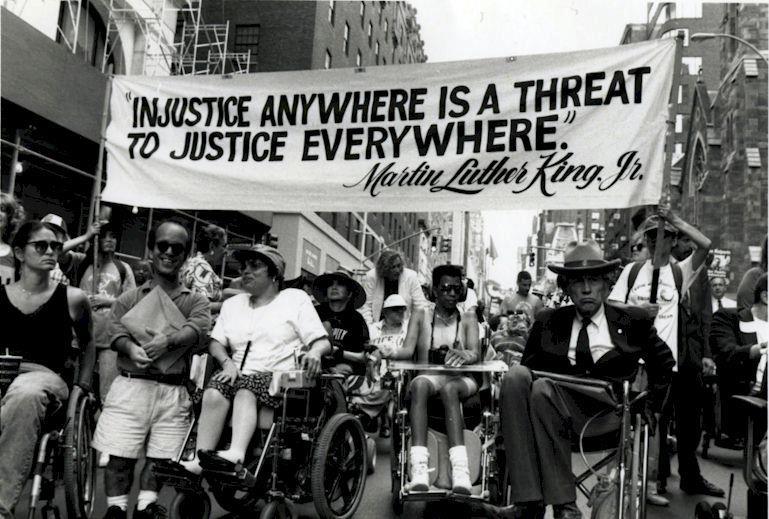
Here are my own observations: I’ve never heard Obama say the words “poor” or “poor people.” There’s no connection to Martin Luther King’s legacy or his poor people’s campaign. The newspeak-esque language that’s used is always “middle class families,” or “working families,” which is not only bloodless and doesn’t acknowledge the suffering out there, but also sends the message “don’t worry corporate lobbyists, we only want to help families that work, not those pitiful lazy wretches who can’t find work.” Never is the disintegration of the family that’s happened in-tandem with economic disintegration mentioned. Though the homeless heavily dotted the streets of Washington DC in 2003 when I was there, and it must be exponentially worse post-collapse, Obama can’t find the strength to say the word “poor,” much less mention the homeless people he must pass in the presidential limousine.

The fact that the left media meekly pleads with Obama: The Nation | White House Meeting with Low-Income Americans? —Obama has not met meaningfully, not once, with poor people or anti-poverty activists (but the author still can’t say the P-word!) and Salon | Will Obama cave on Social Security? shows how far we’ve fallen.

The bubble seems so impenetrable, it’s looking like the Orwellian caste system: there’s the Inner Party: the 0.5%, the segment that controls the elections, the president, Congress, and the corporate class, then the Outer Party: the craven media, political parties, left and right organizations, universities, etc., who are recognizable by their eagerness to serve and provide cover to those within the Inner Party so they maintain the pillowy cocoon of economic safety during the present instability. Then, there’s everyone else. I’m reluctant to call us proles, since there’s still a lot of wealth in our ranks, even an upper-middle-class, but we don’t have much voice and the Outer and Inner Party aren’t very aware of our concerns.

The collapse of The Left is so complete that Mussolini-style corporatism is now the “center,” and pursued doggedly by the Obama and his administration of corporate courtiers. I now blame The Left more than the GOP, much more than the Tea Party, who are responding to the economic collapse and bailout culture same as Occupy. I wish Occupy and the Tea Party could band together and fight the bailouts that are continuing.

We need to look at HOW it got so bad. The corporate culture is suspect #1. It bombards us constantly like the TVs in Orwell’s Nineteen-Eighty-Four you can never turn off. Turn that $#!T off. Too often, the messages coming through are “buy our newest product, and [subtext] buy this thing, it’s all you need to be happy! You don’t need community, church, a moral core, the Bible, etc etc etc.” The messages coming in via mass corporate culture are usually the exact opposite of the inherent value of human life, humans having inherent value and sanctity and dignity, instead, the only value lies in what you produce, your income, or how ruthless you are. Not to mention the pornification of everything; if I had a daughter, I would burn the TV. Several rabbis have pointed out, the dominant mass media culture is closer to the ancient Greek culture that glorified the body and beauty over everything else, than Jewish and Christian cultures that glorified spiritual and intellectual ability. The messages we’ve become acculturated with, have resulted in our loosening our grip on the moral imperatives we must hold fast to….

We’ve lost a lot. Movements which forced President Nixon to sign important legislation like the Clean Water Act, OSHA, etc., they’re gone now. The labor movement is mostly gone.
What do we need to do to fight back against corporate dominance, national decay, and the zombification of everything? First, we need a realistic assessment of where we are and how bad it’s gotten. Then, we have to, on the macro level, build new regional and national movements that articulate the concerns of the poor and disabled, in language that flows from the conscience and moral imperatives that can’t be denied. Only radical love can beat radical evil; I’m for radical love. Occupy Wall Street needs to come back into the streets, but much more is needed. We need the kind of movements that are so powerful, the corporate state has to respond, like Solidarity in 1980s Poland or Tahrir Square in Egypt. Movements are everything.

On the micro level, we must rebuild community. Americans have too often bought into the cult of the self, that if you just buy the new product, you don’t need others. We’ve been lulled into isolation, buying the idea that government will take care of those in need: the poor, the disabled, the elderly. Even when Medicare and Medicaid did provide for the material needs of people like me, which is less and less true today, there’s a need for social and spiritual connection. I myself really need community. We have to rebuild communities that provide those connections. Churches and synagogues need to be a part of this effort, and need to articulate the moral imperatives that give movements their power.

Here’s an example of the moral thinking movements need, from Catholic theologian Paul Tillich:

…When Augustine equates the Kingdom of God with the church and the Kingdom of Satan with the great world empires, he is partly right and partly wrong. He is right in asserting that in principle the church is the representative of the Kingdom of God; he is wrong in overlooking the fact…that the demonic powers can penetrate into the church itself, both in its doctrine and institutions. He is right to the extent in which he emphasizes the demonic element in every political structure of power

— Paul Tillich in Theology of Peace

…The technical development is irreversible and adjustment is necessary in every society, especially in a mass society. The person as a person can preserve himself only by a partial non-participation in the objectifying structures of technical society. But he can withdraw even partially only if he has a place to which to withdraw.

…It is the task of the Church, especially of its theology, to describe the place of withdrawal, mainly the “religious reservation.” It is the task of active groups within and on the boundary line of the Church to show the possibilities of attack, to participate in it wherever it is made and to be ready to lead it if necessary.

…Christian action must find a way to save the person in the industrial society.

— Paul Tillich, The Person in a Technical Society

We have to find the strength to build very new movements that articulate the reality the poor face. We can’t wait for a moribund Congress and Goldman Sachs-controlled presidency to do it. Without national renewal, we face national collapse.

Looking forward to your comments,

Nick

Recommended reading: The Working Poor: Invisible in America by David K. Shipler

The Death of the Liberal Class by Chris Hedges

Feed your brain a long-form meal, not a sound-bite

“No bribe?” [the Congressman] said, “why am I taking this meeting?!”

Posted by – January 14, 2013

If you haven’t heard last year’s Planet Money on campaign fundraising (I refer to this as campaign bribetributions, a hybrid of campaign contributions and blatant bribery) then you should:

Planet Money wrote:
[The Congressman] said, “I have put in two calls to your PAC director and I haven’t received any returned phone calls. Now why am I taking this meeting?” And he held up a piece of paper with my PAC director’s name highlighted in yellow on it with the dates and the times that he had called her to ask her for a campaign donation, and she hadn’t returned his call … He has warned me that if I don’t … [contribute] to his campaign, then he’s not going to help my guys.

Full podcast: Inside Washington’s Money Machine : Planet Money : NPR

We all know the political fundraising climate of our time…the bar for campaign costs keeps going up and up and up. Team Obama said that they had to raise a record $One Billion for the 2012 re-election run, THEN THEY DID, the cycle continues, campaign costs go up exponentially, largely driven by soaring TV ad time prices, and the government world is more and more and more focused on campaign fundraising.

In order to raise the obscene amounts of money necessary, politicians have to spend more and more of their time (time they should be using serving us, the voters and constituents) chasing down donors. They have to send the message that they’re carefully counting who’s giving how much, to create a competitive atmosphere. And send not-so-subtle signals that there’s going to be a return on the investment. Often, these signals are about as subtle as a foghorn at a funeral.

Political graft has become so aggressive, you now have situations like the one described on Planet Money above, implicit quid pro quo no longer carries enough cost certainty for some, some Congressmen are furious when expected PAC graft payments don’t come in fast enough!

Right now, we have a system of open, legal bribery; ALL the incentives and thus, inevitably, ALL the policymaking energy is lined up against efforts to help normal constituents, and lined up for the special interests that give money to elect candidates. This totally skews the system so that the corrupt incentives make the government serve powerful private interests first and the public good only accidentally, but it remains completely legal.

I am desperate to address the crisis of campaign bribetributions making government only serve moneyed interests (not democracy but bribeocracy). If the powerful will never let us remove campaign bribetributions from our system, how do we realign the corruption to serve the people NOT just narrow interests with fat stacks of $$$$???

The Path of the Disabled Man

Posted by – May 3, 2012

I had originally intended to write this for Blogging Against Disablism Day, BADD, 2012. Obviously I’m WAY late for that, over two days after the deadline. But since I’ve participated in BADD in the past, I said hey, why not?! Maybe BADD readers will still find this post, and may, along with other audiences, find “The Path of the Disabled Man” of interest. I’ve never written about gender before. This is an attempt to convey something of the disabled male’s lived experience, and I hope it works.

The Storms Within

People forget, but though humans DO have a spiritual core, they’re coming from tens of thousands of years in the cave as well. Certain things are in-born, hard-wired in the base end of the forebrain, or reptilian brain or whatever you may call it; right next to things like fight or flight, territoriality, hunger and other instincts in the lower brain are our sexuality and some fundamental guides of human attractiveness, passed straight down from the caveman/cavewoman experience.

Those looking for a good cavewoman to pair with, knowing all too well that the pairing would need to produce like eight kids within a decade before the end of your life expectancy at age 30 to have maybe two of your offspring survive in a bleak era of horrendous infant, child and adult mortality—something that would continue to be a huge factor in the everyday lives of humans until the emergence of modern medicine in the 20th century, would automatically look for a cavewoman with a healthy look like she could carry eight babies, full breasts that look like they could feed two babies at once, nice skin signaling health, and a good-looking symmetrical face (a subconscious indicator of good genes in all humans). This is hard-wired in the brain as guideposts pointing toward female attractiveness, as shown by its prevalence today across cultures on all six inhabited continents.  A deep, bedrock thing in the mind; though largely subconscious, it remains ubiquitous.

Those looking for a quality caveman to pair with would automatically seek out the strongest, most battle capable male, who could kill wildebeests and rival tribesmen so the she and the offspring can survive (ironically, with acts of violence, including literally beating an adversary’s brains out, an act of protection and love for the woman). The images of males that women are interested in tend to feature images of strong men, not naked as men like to look at women, but in clothes that convey a status or role as providers and/or protectors, e.g. men in uniform, firemen calendars, etc. What’s attractive in the human male (for most) is more subtle and complicated, but it’s no less hard-wired.

So where does that leave men with permanent disabilities? I’m a guy who’s continually trying to find my way as man, and be a good man alongside severe disabilities in the mix, things like needing a ventilator and intact breathing tubes an inseparable part of my lived experience day-in and day-out and a real barrier. So I’ll speak to that—not meaning to say the path of the disabled male—I include the gay male here, similar challenges—is harder than other paths. And no denying it can be super difficult for women with disabilities given the ableist society we live in, and ambitions today rightfully dwarf the cavewoman’s (and not meaning to discount the struggles of those on transgender or gender queer paths either, which, in my view, is no less hard-wired a position than mine, as evidenced by the cavemen AND the animal kingdom). Of course, regardless of gender, everybody wants the same basic foundational things, to feel safe, wanted, needed, like they matter. This is just “write what you know,” about the lived experience of gender, not “gender theory,” and not intending to say the path of the disabled male is harder, but it is different, very different.

Evidence-Theory cartoon

Cartoon created by Nick, May 2nd, 2012

Women with disabilities, predominately, can still have the fundamental elements of female attractiveness society expects, there is obvious beauty abundant here (I admit, I’m biased in favor of disabled women) while men with disabilities have an incredibly difficult time being providers and protectors. Gimpy RomeoIt’s an uphill battle feeling valuable in any sort of male gender role a disabled guy has attempted to carve out. Men can have physical attractiveness too, no question, we can rock the good-looking symmetrical face with the best of ‘em; but while that may open doors, it won’t take you far beyond that because everybody tends to, consciously or unconsciously, want men to be protectors and providers, and frankly so do I.  I don’t think women who want that from men are “superficial,” I see it as a legitimate, totally valid need. And focusing on what the man offers and actually does is, truly, less “superficial” than how men size up women, which, until a guy matures, will heavily tilt toward the body. Anyhow, to be useful in that way, protecting, providing, being a doer, taking specific actions, physical or not, that matter to someone, is a core thing in the male psyche (granted, “writing what I know” here does involve projecting forth my own feelings and perspective, but I do think a lot of this is universal across men).

More

Heroes Without Glory: Some Good Men of the Old West—Nick explores a dusty, old-fashioned book of social history

Posted by – April 9, 2012

This is the first in a series of book and article reviews I’ll write, taking you through the stacks and exploring old and not so old books about humanity’s story (history). In this case, I’m exploring a fairly rare social history from 1965, probably not something you’d find on the shelves of your local public library or Barnes & Noble. If you like this review, leave a comment below :)
Nick

Heroes Without Glory: Some Good Men of the Old WestHeroes Without Glory: Some Good Men of the Old West by Jack Schaefer
My rating: 4 of 5 stars

It’s seldom that a historical writer captures both the close up, the individual stories, attitudes and essence of the people who contributed to an era, and the wide-view, what the society was like, simultaneously. But by telling the stories of how a diverse cross-section of men contributed to Western settlement, Jack Schaefer did just that with Heroes Without Glory: Some Good Men of the Old West. Schaefer offers detailed portraits of the good men that made building communities in the unforgiving wilds of the territories possible; as Louis L’Amour once wrote—and I’m paraphrasing from memory—”this was a big country and needed big men and women to fill it, big of spirit, big of heart” and it’s these “big” goodmen that Schaefer focuses on. The goodmen, instead of oft-discussed badmen, desperadoes like Billy the Kid, Black Bart, Jesse James and the Younger Gang, Butch Cassidy and “The Wild Bunch” gang and the whole rogues gallery of Western history, who were evidently the subject of frenzied interest at the time of this book’s first publication (1965). In the preface, Schaefer places himself squarely against what he dubs “the cult of the badman,” denouncing the “cultists” for capitalizing on the morbid interest in the “badmen,” who he says impeded growth out West, tearing down and attacking civilization.

This is a book about the goodmen who built the West, a book of lengthy, in-depth biographies of the unheralded pioneer mailmen, explorers, doctors, cowboys, etc. who made the territories livable. Schaefer is clearly drawn to men of extreme patience and fortitude, men of action, not of words. Thus he spends time profiling men like the nearly non-verbal John “Snowshoe” Thompson, a self-described “slow, simple Norski” who used Norwegian snowshoes and techniques to deliver the first mail and supplies (including life-saving medicines) from Nevada to California over the treacherous pass in the Sierra Nevadas. And man of few words and many cows, John Chisum, one of the first cattle barons. He begins the book with eccentric trapper James Capen Adams (“Grizzly” Adams) who spent almost all his life wordlessly among his favorite grizzly bears, in nature. This book made me think about how the Old West ethos, with its focus on action uber alles and the man of action eking out a living from undeveloped wilds as opposed to the buffoonish and idle man of words back east, changed what’s considered manly from the close of the Victorian era up into the present-day. Perhaps without intending to, Schaefer gives us insight into what would become the mold for “manliness” throughout the 20th century.

Why I gave this book Four stars: I’m a big believer that social history is where it’s at, that to really understand the people of a certain time and place, you need to read the words of the people who were there and learn from those everyday folks the rhythms of that past culture, how the society functioned, etc. This book does that. How new settlements functioned, how U.S. territories in the 19th century worked, really fascinates me. As always, the little details hook me; the fact that the biggest bear “Grizzly” Adams ever caught became the model for Charles Nahl‘s design of California’s bear flag (though keep in mind that there were literally over a dozen bear flag designs adopted to varying degrees until a standardized design was finally adopted in 1953), that bovine thievery was a problem, cows trying to break into horse stables and steal the horse’s hay a constant issue out west, that John Chisum maintained his wealth as a Texas cattle baron through the trials and tribulations of the Civil War because he had the foresight to realize that Confederate currency may not hold up, so whenever he got his hands on rebel money, he exchanged it for more cows as soon as possible. I love that stuff.

My favorite part of the book is its biography of Dr. Charles Fox Gardiner. Originally from New York, where King of England, Charles I, had granted the Gardiner family a private island off Suffolk County—Gardiner’s Island—in 1639. In the mid-1800s, Charles Fox Gardiner trained as a doctor in New York City, on Roosevelt Island—then known as Blackwell’s Island—at one of the predecessors of Goldwater hospital. Then he took his skills west to aid the frontier mining communities in Colorado Territory. That this book contained an account of pioneer medicine is why I picked it up. It doesn’t disappoint on that score.

Gardiner built a shanty for his office with a blue and gold sign outside. No one trusted the new guy initially, but slowly his reputation grew by word of mouth and he had a steady and growing practice on his hands. “Patient after patient was unable to pay, then out of nowhere one would pay $100. Unusual but fascinating,” Gardiner said. I found the insights into pioneer doctors fascinating, and I hope to find the book Gardiner himself wrote about his experiences, Doctor at Ridgeline, in an accessible format soon.

The downsides of Heroes Without Glory: Some Good Men of the Old West. come with the author’s old-fashioned views and ancient prejudices that really filter the content, and in some cases really stink it up, especially regarding the native tribes of the West. The only Native American “goodman” profiled is Chief Washakie, leader of the Eastern Shoshones. Washakie was indeed a great leader of the Shoshones, and a pivotal figure in not only American Indian history, but also of the Old West in whole. Indeed, we may not even know the name Shoshone today if not for Washakie; the loose band of Shoshone tribes may have been wiped out by enemy tribes, and probably wouldn’t have even become a federally-recognized tribe without his forceful leadership. Most important was his political skills; Washakie secured a large reservation, Wind River Indian Reservation, in what is now Wyoming, for his fairly small band of Eastern Shoshones because he was such a forceful and well-known leader and peacemaker for his people. Schaefer artfully highlights Washakie’s remarkable achievements, but disturbingly, Schaefer seems to herald Washakie more for his exceeding patience with the constant oppression, control and expropriation of lands previously reserved for the Shoshone. Every decade, Uncle Sam would bite off another giant piece of the land he’d promised to them, and one year they forced them to half the Wind River Reservation with the Arapaho, their ancient rivals. Washakie didn’t—probably couldn’t—fight back, and shared all he could with the Arapahoes.

The Indian leaders that met such humiliations with arrows and repeating rifles aren’t mentioned here. It’s also sucky that this book doesn’t profile a single woman; that amounts to cleaving the history of the West in half! Going in with a wide open mind, one can still appreciate this stuff. But no mind is open enough to like the biography Schaefer includes on Valentine T. McGilicuddy. I thought the chapter on McGilicuddy would focus on his years as a trailblazing frontier Army surgeon and surveyor, but is mostly an account of McGilicuddy’s long tenure as Indian Agent on Pine Ridge Reservation in the Dakotas; it’s one of the more offensive views of Indians you’ll find, paternalistic, infantilizing, ugh. You can skip this chapter if you’d like. But it’s also historical evidence of how loathsome the reservation system has been.

It can be invaluable to read older perspectives. I give this four stars because it’s a rare social history, with great detail of how it really was in biographies of (in order of appearance) Grizzly Adams, George A. Ruxton, John “Snowshoe” Thompson, John Phillips, Washakie, John S. Chisum, Thomas J. Smith, Valentine T. McGillycuddy, Charles Fox Gardiner, and Elfego Baca. Definitely worthwhile for Wild West aficionados and history buffs.

View all my reviews

Related Posts with Thumbnails